Ransomware in Healthcare: Required Reading
July 21, 2021


Unless you’ve been living on a desert island, you’ve been hearing about the harrowing rise in ransomware attacks in the U.S. and around the world. There’s no shortage of ransomware in the news, but we’ve pulled together some required reading to help you understand why it’s on the rise—especially in healthcare—and to explain the costs and risks of ransomware. You’ll also get tips on what you can do to avoid becoming a victim, and what to do if the worst happens.
- Fierce Healthcare:
Before attacking IT systems, hackers stole information from 147K patients, Scripps Health says
- Becker’s Hospital Review:
18 numbers that show how big a threat ransomware is for healthcare
“An attack on San Diego-based Scripps took the health system offline for about three weeks, resulting in patients having to go elsewhere for emergency services.”
- Security:
Clinical treatment of ransomware in healthcare – June 9, 2021
“In 2020, at least 92 US healthcare organizations suffered ransomware attacks, resulting in an average ransom demand of $169,446 and netting cybercriminals an estimated $15.6 million in ransoms demanded from the US healthcare sector.”
- Healthcare Dive:
Rising hospital ransomware attacks could endanger patients, hit bottom lines hard, Moody’s says
- Cybersecurity News:
Sky Lakes Medical: A First-Hand Look at Fall Ransomware Attack, Recovery
“What Happened? On October 26, 2020, an employee opened an email and clicked a link to Google Drive and downloaded a file the individual thought was related to a company bonus…”
- HealthTech:
The Threat of Ransomware Still Looms Large Over Healthcare
“Security firm KnowBe4 found that organizations that conduct regular anti-phishing exercises can lower their risk by more than 80 percent over the course of a year.”
Employees clicking on a seemingly valid email link is one of the most common causes of ransomware attacks. Our Phishing Simulation service is a low-cost, high-impact way to identify vulnerable employees and train them to help protect your practice. Download the best-practices whitepaper or to assess your risks.
- Dark Reading:
Colonial Pipeline Cyberattack Proves a Single Password Isn’t Enough
“The single-factor authentication method granted the attackers access to Colonial’s IT network and, in turn, its sensitive data.”
“Given the growing frequency of attacks and the greater potential for operational disruption, regulatory scrutiny and reputational risk, the [healthcare] sector will come under increasing pressure to boost its investment in cybersecurity.”
- Becker’s Hospital Review:
US officials: Do these 7 things after a ransomware attack
____________
If you’re worried about your IT security, contact us to schedule a risk assessment and learn more about our holistic MTS Secure framework.
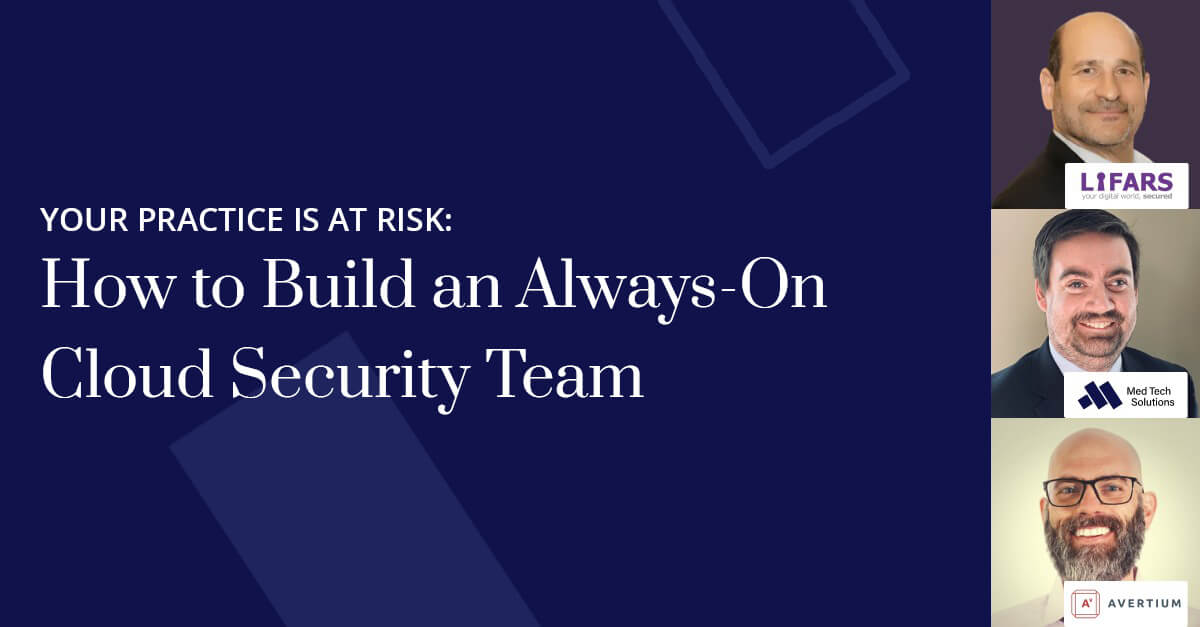
ALWAYS-ON CLOUD SECURITY TEAM
When crisis strikes, healthcare providers have an always-on team of specialists for immediate response. But how will you respond when the crisis is an attack on your practice’s data, and every second counts? You need a multidisciplinary team of experts who know your systems and how to respond to limit damage, so you can get back to caring for patients.
In this timely panel discussion with healthcare cloud, security, and incident-response experts you’ll learn:
- The security specialties you need for your always-on team
- How to plan and practice your response to a security breach
- Easy preventive actions you can take right away to improve your security posture
 VIEW WEBINAR